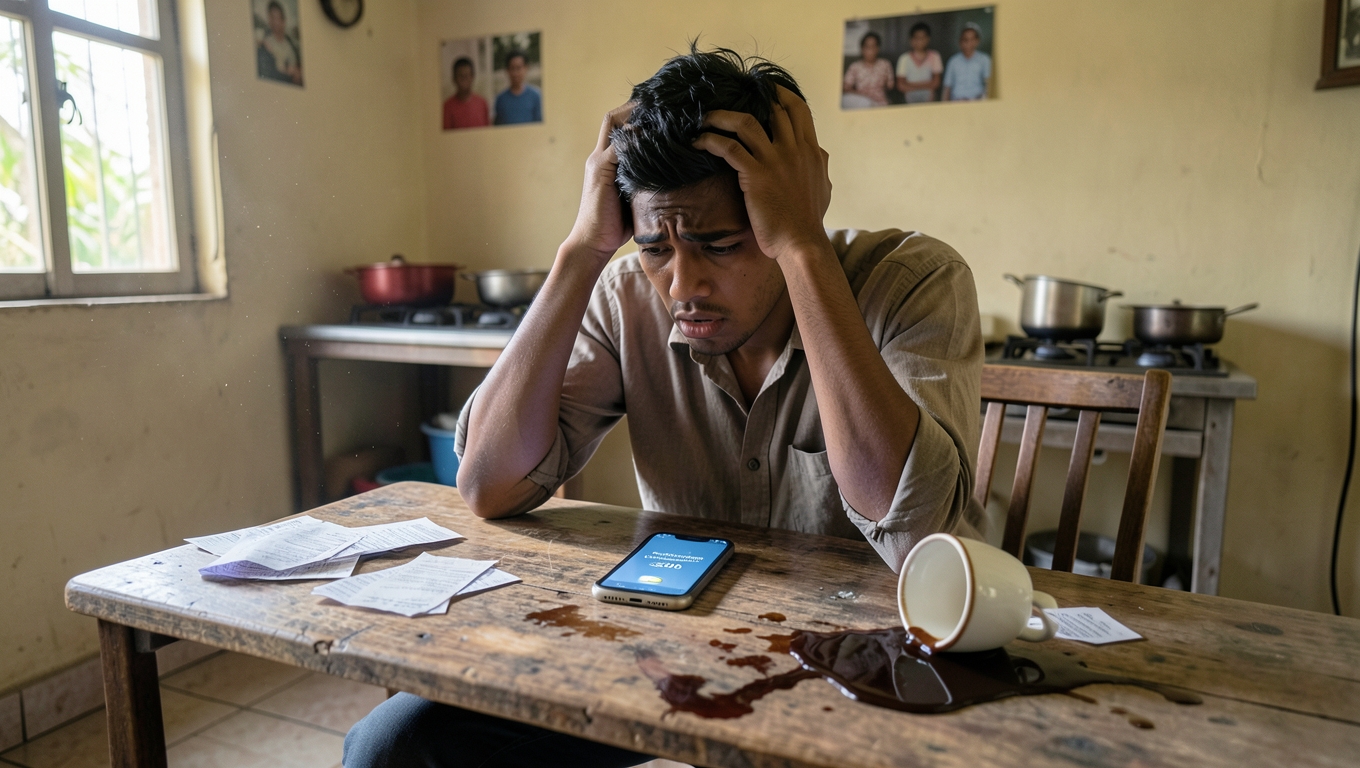
Many times, you go collect your monthly salary in Nigeria, and before you even reach middle of the month, your bank account don dey scream for help. You begin wonder where all the money vanish to, but you no fit remember wetin you spend am on. This kind confusion na why learning how to track your daily expenses without losing your mind be the best thing you fit do for your personal finance today. If you want make your hard-earned naira stretch reach month-end, you need simple money management tips that will show you your actual spending patterns clearly.
Why Manual Tracking Works Better Than Complex Budget Apps
Wetin Make Bank Apps No Dey Tell You the Whole Truth About Your Money?
Plenty people rely on automatic bank alerts or financial apps to monitor their spending, but this habit often leaves blind spots. When your bank deducts money automatically, you disconnect emotionally from the transaction because no physical effort was required. I remember when I used to think my bank app was helping me, only to realize I was ignoring small daily charges. Financial experts note that manual entry forces your brain to register the financial pain of every single purchase.
How the Thirty-Second Method Saves You From Spending Fatigue
Tracking your daily expenses does not mean you must sit down with a heavy calculator every evening for one hour. You only need the thirty-second method where you log every single kobo immediately after you pay for it. When you buy roasted plantain and groundnut by the roadside, just bring out your phone and record it right there. This small habit builds strong financial discipline without stressing your brain or taking your precious time.
Wetin You Need to Capture That Automatic Apps Usually Miss
Automatic tracking tools often fail when you use cash for small market runs or send money via platforms like OPay for transport fare. If you split a plate of food with your colleague using mobile transfer, your bank statement might just show a random name. Keeping a manual record ensures that cash payments, peer-to-peer transfers, and split bills never disappear from your financial radar.
How to Set Up Simple Categories That Won’t Stress You
Which Basic Expense Categories Should You Stick To?
If you create twenty different spending categories, you will definitely get tired of tracking your money within three days. You only need five broad buckets to capture ninety percent of your daily life in Nigeria. Keeping your structure clean and straightforward is the secret to maintaining consistency with your budget over the long term.
How to Group Your Food, Transport, and Utility Bills
Your daily expenses usually revolve around a few predictable areas that define your survival in the city. Here is a quick table showing how you can easily group your everyday spending without any confusion:
| Category | Common Examples | Where You Spend It |
|---|---|---|
| Food & Dining | Groceries, buka food, pure water, snacks | Open market, supermarkets, restaurants |
| Transport | Bus fare, fuel, bike man, parking fee | Motor park, filling station, roadside |
| Housing | Rent, prepaid meter light, generator fuel | Landlord, PHED/IKEDC, fuel station |
| Entertainment | Data subscription, weekend outings, games | MTN, Glo, viewing centers, bars |
Why You Must Avoid Creating Too Many Sub-Categories
When you start dividing your transport into ‘bus morning’, ‘bus evening’, and ’emergency keke’, you are setting yourself up for failure. You will waste valuable minutes trying to figure out where a fifty naira recharge card belongs. Simplicity keeps your mind clear and ensures you stick to your daily tracking routine.
How to Track Your Daily Expenses Without Stressing Your Brain
Wetin Be the Easiest Tool to Use for Daily Tracking?
You do not need an expensive laptop or complicated spreadsheet software to keep tabs on your finances. A simple pocket notebook or a basic note-taking app on your smartphone works perfectly for daily expense logging. I personally use a small notebook because writing things down with a pen creates a stronger mental connection to my spending.
How to Build a Consistent Logging Habit Without Forgetting
The biggest enemy of expense tracking is procrastination because waiting till nightfall means you will forget half your purchases. Make it a rule to record every payment before you even pocket your change or leave the vendor’s stall. Once this action becomes second nature, you will no longer see it as a chore.
How to Handle Days When You Spend Too Much Cash
We all have those rough days when unexpected expenses pop up and disrupt our well-laid financial plans. Do not throw away your tracking book just because you overspent on a particular afternoon. Acknowledge the extra spending, record the exact figures, and simply adjust your plans for the remaining days of the week.
How to Spot Hidden Money Leaks in Your Daily Spending
Where Do Small Amounts of Money Usually Disappear To?
You might be wondering why your account balance keeps dropping even though you claim you have not bought anything major. The culprit is usually the tiny, unnoticed purchases like buying soft drinks, paying service charges, or tipping random people. When you track daily, these silent leaks become glaringly obvious right before your eyes.
How to Cut Down Impulse Buying Using Your Tracking Data
When you review your daily logs at the end of every week, you will spot patterns that shock you. You might discover that you spend more money on weekend data bundles or casual clothes than you actually save. This clear visibility gives you the power to say no the next time temptation knocks on your door.
Wetin to Do When Your Tracking Reveals an Emergency Gap
Tracking your daily expenses helps you realize quickly if your income is completely out of touch with your living costs. If your daily food and transport consume ninety percent of your salary, you will know immediately that you need to find alternative ways to increase your earnings. Real financial awareness stops you from living in denial about your actual financial standing.
How to Maintain Your Expense Tracking Habit for the Long Haul
Why Do Most People Stop Tracking Their Expenses After Two Weeks?
Many beginners jump into money management with too much excitement and unrealistic expectations that burn them out quickly. They try to account for every single kobo down to the exact fraction, which makes the whole process feel like prison. You need to remember that progress matters far more than absolute perfection.
How to Adjust Your System When Life Gets Too Busy
There will be weeks when work pressure is so high that keeping up with manual logging feels nearly impossible. During such hectic periods, simply collect your receipts or rely on bank alerts, then do a quick batch update on Sunday evening. Flexibility keeps your financial system alive instead of breaking it completely.
How Small Daily Tracking Habits Transform Your Financial Future
Tracking your daily expenses without losing your mind is not a punishment, but a powerful tool for taking back control of your life. When you know where your money goes every day, financial peace of mind follows naturally. Start small today, stay consistent with your logging, and watch your financial habits change for the better.